

Course Summary
| Course Location: | Multiple locations |
|---|---|
| Duration: | Two Years |
| Level: | Postgraduate |
| Delivery: | Hybrid Learning, Part-time |
| Campus: | University of Greater Manchester, Approved Dental Practices |
| Award: | MSc |
| Credits: | 180 |
MSc Specialist Practice of Dento-Alveolar Surgery
Tell
Show
Do
The MSc Specialist Practice of Dento-Alveolar Surgery seeks to increase the general dentists’ skills in minor oral surgery and develop competencies.
Many straightforward cases requiring minor oral surgery treatment are referred for specialist treatment yet they could and should easily be within the scope of the general practitioner.
Apart from teaching basic surgical sciences the programme will teach advanced bone augmentation procedures essential for implant site enhancement.
This programme is ideal for general practitioners who want to hone their surgical skills to expand their practice and increase the scope of their implant placement.
Related course:
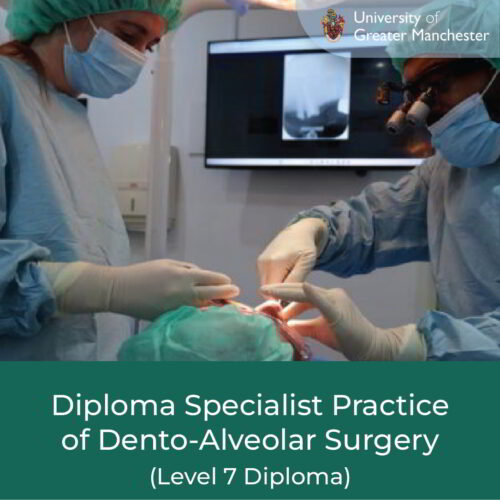

The Advanced Prior Learning Delegate Pathway is a tailored program for professionals with advanced prior learning in Restorative Aesthetic Dentistry and Implantology.
The APL programme offers an accelerated curriculum that builds upon your existing qualifications and experience, with a duration customised to your current knowledge and skills. Through this pathway, you will deepen your expertise in advanced implantology techniques, restorative aesthetic dentistry, integrate the latest research and methodologies into your practice, and complete specific modules that complement your prior learning.
This pathway enables you to fast-track your MSc Restorative Aesthetic Dentistry and Implantology by leveraging your previous qualifications and focusing on advanced topics that will enhance your specialist practice.
Apply now to take the next step in advancing your career.
| Timeline | Clinical Skills Development |
|---|---|
| Month 1 | The Examination & Anatomy |
| Month 2 | Single Tooth, Multiple Teeth & Retained Root Extractions |
| Month 3 | Pathology & Complications |
| Month 4 | Trauma, Medico Legal, & Crown Lengthening |
| Month 5 | Clinical Attachments |
| Month 6 | Clinical Attachments |
| Month 7 | Clinical Attachments |
| Month 8 | Bone and Bone Disease |
| Month 9 | Exodontia Assessment |
| Month 10 | Orofacial Infection Complications |
| Month 11 | Clinical Attachments |
| Month 12 | Clinical Attachments |
| Month 13-24 | URECA, Reflective Clinical Practice & Dissertation |

This module aims to foster an evidence-based approach to patient selection while equipping you with the practical skills needed to identify and deliver advanced treatment modalities and conduct risk assessments in multidisciplinary procedures.
Its objective is to highlight potential complications in oral surgery and for students to be able develop risk assessment strategies to avoided and minimise complications. Realistically it is not possible to prevent all complications, so management strategies are an essential.
Its objective is to highlight potential complications in oral surgery and for students to be able develop risk assessment strategies to avoided and minimise complications. Realistically it is not possible to prevent all complications, so management strategies are an essential.
The module will explore the ethical issues of informed consent and management of patient expectations. The module develops communication skills, organisation and planning, problem solving, treatment planning, risk assessment, ethical responsibility and consent.
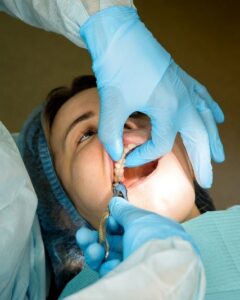
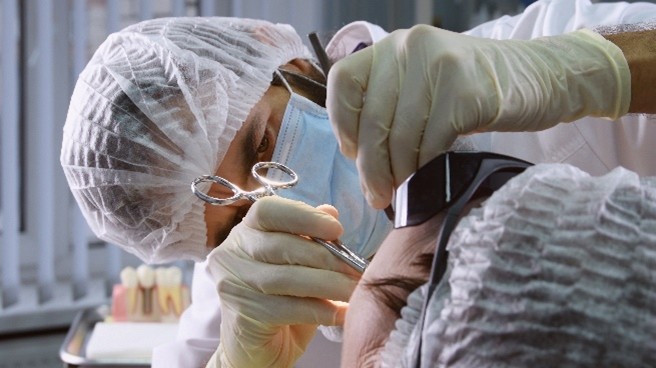
This module will provide a sound understanding of the key causes of diseases of the oral cavity; their diagnoses, associated systemic conditions and appropriate medical treatments and surgical management. This will include conducting a literature search and critically appraise current evidence relating to the management of oral pathology and its evidence-based management. Through understanding and the use of appropriate academic resources students will focus on how to incorporate ideas from their reading into an assignment using quotations, paraphrases and references.
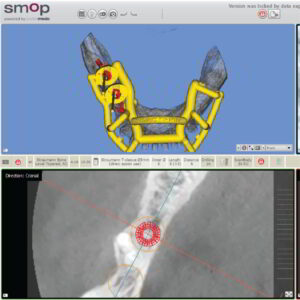
This module offers an introduction to Cone Beam Computed Tomography (CBCT) through a series of practical training sessions focused on three-dimensional imaging systems and their foundational principles. You will develop skills in navigating and interpreting three-dimensional images.
Throughout the module, you will learn about the fundamental technology behind CT scans, including their advantages and limitations.
Additionally, you will gain knowledge of the operating and legal requirements essential for the safe and effective use of radiographic equipment, as well as the health and safety considerations related to ionizing radiation.
This module will provide a sound understanding of the key concepts of augmentation of dento-facial soft and hard tissues and help students to develop the practical skills necessary for successful and predictable regeneration of lost tissue.
Students will conduct literature searches and critically appraise current evidence relating to the management of tissue defects or diseased tissue. Through understanding and using appropriate academic resources students will focus on how to incorporate ideas from their reading into an essay using quotations, paraphrases and references.
This module will also consider potential complications and risk assessment strategies to avoid and minimise complications. The module develops communication skills, organisation and planning, problem solving, treatment planning, risk assessment, ethical responsibility and consent.
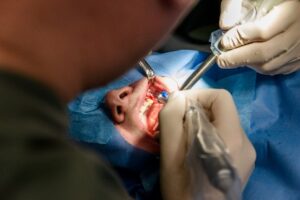
This module is designed to help you develop the research skills necessary to identify your dissertation topic, create a detailed proposal, and plan your research effectively. It will equip you with the academic skills required for Master’s level study.
The module encompasses key areas such as clinical statistics, evidence-based practice, critical appraisal, measurement, and research design, with a focus on their specific applications in medical research and treatment.
You will learn how to formulate realistic research objectives and establish an appropriate conceptual and analytical framework for your study. Additionally, you will acquire skills in identifying, collating, and critically reviewing relevant literature, enabling you to make informed decisions regarding the research philosophies, strategies, and methods best suited to your project.

As an experienced dental professional, this optional module invites you to critically assess your own knowledge base and reflect on the connections between your existing expertise and what you aim to learn through the evaluation of clinical cases. The module promotes information literacy by encouraging the use of contemporary and seminal sources to create a critical evaluation of restorative dentistry and implantology practices, enabling you to develop strategies for enhancing your practice.
Additionally, there will be opportunities for supervised clinical placements involving implant procedures on actual patients
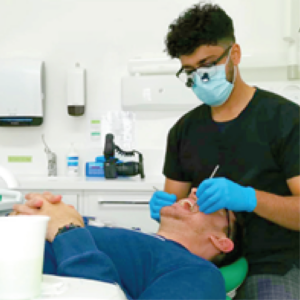
This taught module offers the opportunity to conduct an extended and significant research project. It enables you to synthesize the academic knowledge gained from your previous postgraduate studies and practical experiences to create an evaluative and critical discussion on a specialist dental topic directly related to your program.
The module aims to enhance your skills in identifying a problem, determining its significance, formulating a hypothesis or proposition, designing a method for testing the hypothesis, and evaluating the results.
Payment Terms
We offer flexible payment options to suit your needs:
- Pay in Full – Settle the full course fee upfront.
- Finance Option via Tabeo – Spread the cost with financing arranged through our external partner, Tabeo.
- 12-Month Payment Plan – Available for both hands-on and digital formats:
- Hands-on Course: £5,000 deposit, followed by 12 monthly payments of £1,450
- Digital-Only Course: £5,000 deposit, followed by 12 monthly payments of £550
FAQ
Comprehensive (Blended Learning Route):
- We run three cohorts per year: May, and September
- Each cohort is intentionally capped at 20 delegates, supported by 2 experienced lecturers, ensuring close supervision and personalised learning
- This route is ideal for clinicians who value hands-on mentorship alongside structured academic teaching
Digital / Distance Learning Route:
- Available to start at any time
- Extremely popular with international and distance-learning delegates, including those based in Australia, Europe, the Middle East, Ireland, or UK-based clinicians needing maximum flexibility
- Also, well suited to experienced implant surgeons who want a formal UK-accredited qualification (for example, clinicians who have placed a high volume of implants internationally but do not yet hold a UK-recognised award)
- Typically completed in approximately 2 years, however motivated delegates who dedicate several hours per week often complete sooner
Yes. We offer flexible entry points. If you join mid-cohort, you will be given the opportunity to attend any missed hands-on learning days with the next available cohort, ensuring no loss of training.
Yes, this is possible for many delegates.
- Hands-on days are fixed, but once these are completed—and your coursework, exams, and (where applicable) dissertation are passed—you may complete early
- The same flexibility applies to the dissertation component, depending on your pace and submission
Progression explained clearly:
- During the first 12 months, you complete the Level 7 Diploma, alongside structured hands-on mentorship
- The GDC requires clinicians to demonstrate competency and appropriate supervision before placing implants independently
- There is no fixed number of mentored implant cases required (unlike IV sedation, for example)
- Mentorship is competency-based, meaning:
- An experienced surgeon (e.g. a maxillofacial surgeon) may require less mentorship
- A newly qualified dentist may require more structured supervision
- Once your mentor has formally signed you off as competent across the required domains, and you have completed the accredited Diploma, your indemnity provider will allow independent implant placement
Upon completion of the Diploma stage, you will be awarded a Level 7 EduQual Postgraduate Diploma, and you may then progress onto the MSc if desired.
Distance Learning MSc delegates may also complete earlier, as progress is based on online engagement and assessment completion.
Yes.
- You may enrol on the MSc without GDC registration
- You will not be able to treat patients directly
- You can observe clinical sessions and will have full access to phantom-head training and non-patient hands-on components
- Recognition varies by country, and delegates must confirm requirements with their local regulatory authority
- As a UK-accredited MSc, the qualification is widely accepted internationally
- As this is a part-time MSc, it does not confer specialist status on registers such as the UK GDC Specialist Register
- The qualification supports legal practice in many international jurisdictions, subject to local regulations
Yes, as part of the hands-on mentorship route.
- You will have opportunities to assist, raise flaps, suture and conduct complex extractions under supervision
- Your mentor will assess your competency and provide progressive responsibility in line with patient safety and governance
We offer a range of flexible payment options to support our delegates:
- Pay in full – via our website or by bank transfer
- Finance options – available through Tabeo (subject to approval)
- 12-month payment plan – £5,000 deposit to secure your place, with the remaining balance spread evenly over 12 monthly instalments
Bank Transfer Details:
Account Name: Syntrain International Training
Sort Code: 30-91-01
Account Number: 20607868
Yes.
- You may complete the Level 7 Diploma first
- You will then APL (Accredit Prior Learning) onto the MSc programme
- APL fees and details are clearly outlined in the brochure
At present, we do not offer Student visa sponsorship for our part-time MSc programmes.
These programmes are designed for clinicians who already hold the appropriate right to work or study in the UK, or who are completing the course via the digital/distance-learning route.
Mentorship is tailored to your development and experience. All mentorship is focused on safe progression, skill development, and confidence building. Clinical decisions are made in the best interest of the patient, with treatment undertaken under the mentor’s indemnity.
No. SynTrain provides the patients for your mentored clinical sessions.
This removes the stress of case sourcing and ensures all cases are appropriately selected, governed, and supervised, allowing you to focus fully on developing your clinical skills.
Post-nominals are awarded in line with the qualification completed and provide credible recognition of your advanced training.
- MSc – MSc Specialist Practice in Dento Alveolar
Yes. Our digital-only pathways are ideal for international delegates, allowing you to complete the course entirely remotely without compromising educational quality.
Absolutely. Our programmes are specifically designed for busy clinicians. With a flexible structure, you can progress at a pace that works around full-time work and family life.
Yes. Our MSc programmes are awarded by the University of Greater Manchester, providing a recognised and respected academic qualification.
No, physical attendance is not mandatory. You have the option to attend if you wish, but it is not a requirement of the course. Your academic tutor will arrange weekly Zoom or Teams meetings at a time that is convenient for you.
Related Courses
-
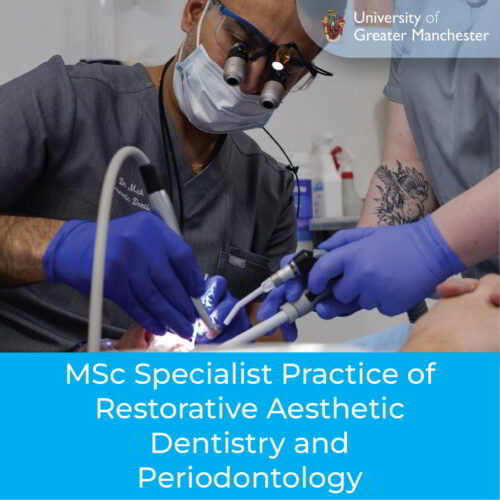
MSc Specialist Practice of Restorative Aesthetic Dentistry and Periodontology
-
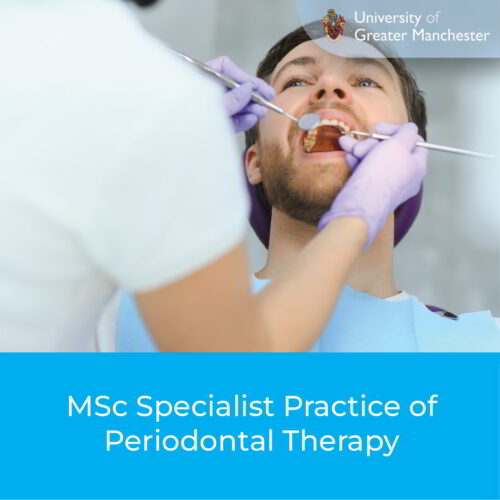
MSc Specialist Practice of Periodontal Therapy
-
MSc Specialist Practice of Digital Dentistry
-
MSc Specialist Practice of Clinical Aesthetic Non-Surgical Interventions
-
MSc Specialist Practice of Computer-Guided Implant Dentistry
-
MSc Specialist Practice of Pulpal Therapy and Endodontics