Course Summary
| Course Location: | Multiple locations |
|---|---|
| Duration: | Two Years |
| Level: | Postgraduate |
| Delivery: | Hybrid Learning, Part-time |
| Campus: | University of Greater Manchester, Approved Dental Practices |
| Award: | MSc |
| Credits: | 180 |
MSc in Digital Dentistry
University of Greater Manchester programmes delivered by the City of London Dental School at SynTrain Academy, an authorised CoLDS delivery site
Tell
Show
Do
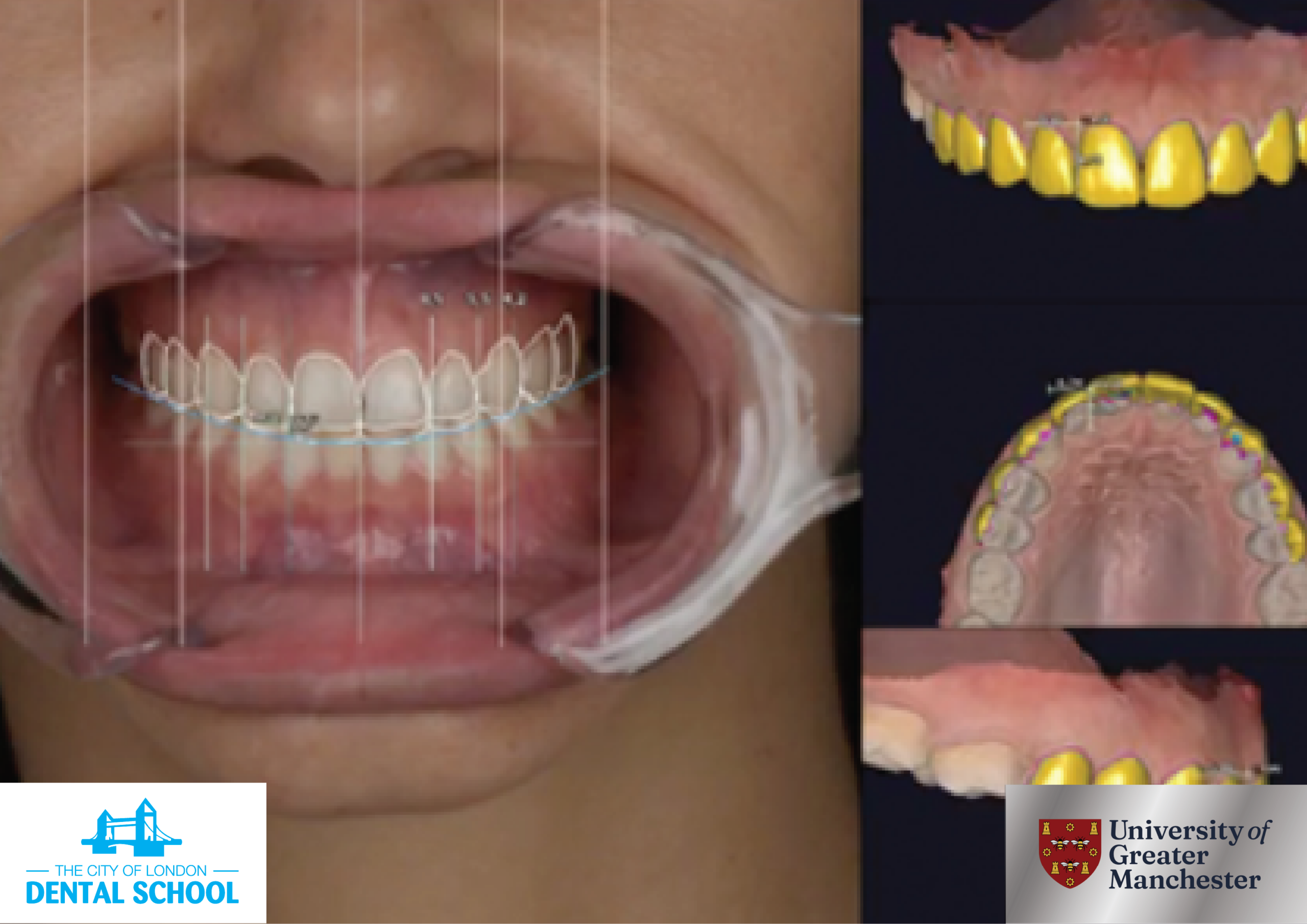
The MSc in Digital Dentistry explores the essential role of digital technology in modern dentistry, from diagnostic and treatment planning to prosthesis fabrication. This programme is designed to help you effectively integrate these established technologies into your advanced practice, whether in restorative, implant, or orthodontic dentistry.
By mastering these digital tools, you will be able to deliver consistent, high-quality care, ultimately improving the overall patient experience.
University of Greater Manchester programmes delivered by the City of London Dental School at SynTrain Academy, an authorised CoLDS delivery site.


By the end of this programme, delegates will be able to:
- Apply advanced digital diagnostics and treatment planning using CBCT, intraoral scanning, and fully digital workflows
- Design and deliver high-quality restorations using CAD/CAM and digital prosthetic principles
- Plan and execute implant cases using digital planning and guided surgery techniques
- Integrate 3D printing and emerging technologies into everyday clinical practice
- Critically evaluate evidence and implement digital solutions to enhance clinical, ethical, and business outcomes
| Timeline | Clinical Skills Development |
|---|---|
| Thursday, 17th September 2026 | Foundation Knowledge of Digital Dentistry |
| Friday, 18th September 2026 | Foundation Knowledge of Digital Dentistry |
| Thursday, 19th November 2026 | Digital Impression Scanners & Digital Photography |
| Friday, 20th November 2026 | Digital Impression Scanners & Digital Photography |
| Thursday, 14th January 2027 | Digital Radiography & CBCT |
| Friday, 15th January 2027 | Digital Radiography & CBCT |
| Thursday, 25th February 2027 | 3D Printing |
| Thursday, 20th May 2027 | Digital Treatment Planning & Digital Smile Design |
| Friday, 21st May 2027 | Digital Treatment Planning & Digital Smile Design |
| Thursday, 16th September 2027 | Digital Orthodontics |
| Friday, 17th September 2027 | Digital Orthodontics |
| Month 13 -24 | URECA, Reflective Clinical Practice & Dissertation |

Faculties

Prof Adam Nulty
Dentist
Prof Chris Lefkaditis
Dentist
Prof Patrik Zachrisson
Dentist
Prof Quintus Van Tonder
DentistThis module is designed to develop evidence-based knowledge regarding patient selection as well to instil the practical skills required to recognise and provide advanced level treatment modalities and risk assessment. The aim of this module is also to highlight potential complications in oral surgery and for students to be able to develop risk assessment strategies to avoid and minimise complications.
Realistically it is not possible to prevent all complications, so management strategies are essential. As a natural progression from these issues the module will explore the ethical issues of informed consent and management of patient expectations. The module develops communication skills, organisation and planning, problem solving, treatment planning, risk assessment, ethical responsibility, and consent.
This technical module is designed to deliver practical training in the selection and application of dental digital technology to the practice of dentistry and includes classroom and laboratory work.
Students will attend formal lectures incorporating discussion and interactive group learning activities and problem-based learning. Individual software learning will be delivered through online tutorials and exercises designed to develop competency and familiarity with the various applications. Laboratory sessions at the school’s digital laboratory will introduce students to the hardware and various manufacturing processes used to fabricate components and appliances.
The module aims to introduce the concept of digital smile design and the aesthetic management of dentition through understanding the application of three-dimensional imaging systems and supporting software. Through this module, you will learn various restorative protocols used in aesthetic makeovers with both their advantages and their limitations. Patient case studies will be critically analysed and treatment planned to use the technologies taught within the module.
Patient aesthetic awareness coupled with the development of new orthodontic techniques, Implant, and restorative rehabilitation have increased the number of adults seeking advanced dental treatment.
This has increased the likelihood of dentists having to diagnose and treat the occlusion as part of a larger treatment plan. This multidisciplinary module considers the anatomy, aetiology, and management of occlusion from an orthodontic and restorative perspective.
The aim of this module is to enable the dentist to effectively diagnose and formulate a treatment plan so that the patient can be treated with a comprehensive multidisciplinary approach.
This module is designed to help you develop the research skills necessary to identify your dissertation topic, create a detailed proposal, and plan your research effectively. It will equip you with the academic skills required for Master’s level study.
The module encompasses key areas such as clinical statistics, evidence-based practice, critical appraisal, measurement, and research design, with a focus on their specific applications in medical research and treatment.
You will learn how to formulate realistic research objectives and establish an appropriate conceptual and analytical framework for your study. Additionally, you will acquire skills in identifying, collating, and critically reviewing relevant literature, enabling you to make informed decisions regarding the research philosophies, strategies, and methods best suited to your project.
This taught module offers the opportunity to conduct an extended and significant research project. It enables you to synthesize the academic knowledge gained from your previous postgraduate studies and practical experiences to create an evaluative and critical discussion on a specialist dental topic directly related to your program.
The module aims to enhance your skills in identifying a problem, determining its significance, formulating a hypothesis or proposition, designing a method for testing the hypothesis, and evaluating the results.
The module aims to cultivate reflective practitioners by fostering the development of innovative and reflective thinking alongside problem-solving skills.. Reflective practice serves as a vital tool for enhancing clinical judgment and building medical expertise, encouraging a thoughtful and evidence-based approach to clinical care.
The module requires students to formulate and justify their own patient centred treatment plans with illustrated case reports. The module affords the opportunity to demonstrate knowledge and understanding of a specialist treatment modality and reflect on learning experiences and competencies gained from various treatment modalities relevant to their dissertation topic.
Students will also need to consider how their practices and attitudes have evolved and changed over time because of these experiences. Case reports will be used for them reflect on treatment outcomes so helping them to identify connections between intended and actual outcomes achieved and how they may be improved upon.
Payment Terms
We offer flexible payment options to suit your needs:
- Pay in Full – Settle the full course fee upfront.
- Finance Option via Tabeo – Spread the cost with financing arranged through our external partner, Tabeo.
- 12-Month Payment Plan – Available on hands-on format.
- Hands-on Course: £5,000 deposit, followed by 12 monthly payments of £1,950.
The Advanced Prior Learning (APL) Delegate Pathway is designed for clinicians who have successfully completed the Diploma and wish to progress their academic study and clinical development at an advanced level.
Through this pathway, delegates will further develop their knowledge and clinical understanding in advanced implantology and restorative aesthetic dentistry. The programme places particular emphasis on the critical evaluation of contemporary research, the application of evidence-informed methodologies, and the integration of advanced principles into clinical practice. In addition, delegates will complete a series of specified modules designed to extend, complement, and consolidate prior learning.
The Advanced Prior Learning Delegate Pathway offers an appropriate progression route for practitioners seeking to enhance both their academic profile and clinical expertise within a structured and rigorous educational framework.
Apply now to take the next step in your professional development.
FAQ
Comprehensive (Blended Learning Route):
- We run one cohort each year, with 12 teaching days scheduled two per month.
- Each cohort is intentionally capped at 20 delegates and supported by 2 experienced lecturers, ensuring close supervision and personalised learning.
Digital / Distance Learning Route:
- Available to start at any time
- Extremely popular with international and distance-learning delegates, including those based in Australia, Europe, the Middle East, Ireland, or UK-based clinicians needing maximum flexibility
- Also, well suited to experienced implant surgeons who want a formal UK-accredited qualification.
- Typically completed in approximately 2 years, however motivated delegates who dedicate several hours per week often complete sooner
The programme is aimed at the higher educational needs of General Dental Practitioners who intend to introduce digital dentistry as a treatment modality into their practices or to expand on existing knowledge and skills. It also instils the core skills essential for the professional practice of dentistry using new technologies and a commitment to lifelong learning.
Yes, our MSc Specialist Practice in Digital Dentistry is offered in partnership with IDDA, and Adam Nulty is one of the lecturers on the course.
Yes. We offer flexible entry points. If you join mid-cohort, you will be given the opportunity to attend any missed hands-on learning days with the next available cohort, ensuring no loss of training.
Yes, this is possible for many delegates.
- Hands-on days are fixed, but once these are completed—and your coursework, exams, and (where applicable) dissertation are passed—you may complete early
- The same flexibility applies to the dissertation component, depending on your pace and submission
Progression explained clearly:
- During the first 12 months, you complete the Level 7 Diploma, alongside structured hands-on experience
Upon completion of the Diploma stage, you will be awarded a Level 7 EduQual Postgraduate Diploma, and you may then progress onto the MSc if desired.
Yes.
- You may enrol on the MSc without GDC registration
- You will have full access to phantom-head training and non-patient hands-on components
- Recognition varies by country, and delegates must confirm requirements with their local regulatory authority
- As a UK-accredited MSc, the qualification is widely accepted internationally
- As this is a part-time MSc, it does not confer specialist status on registers such as the UK GDC Specialist Register
- The qualification supports legal practice in many international jurisdictions, subject to local regulations
No, this course does not offer mentorship. However, you will observe live patient treatment.
We offer a range of flexible payment options to support our delegates:
- Pay in full – via our website or by bank transfer
- Finance options – available through Tabeo (subject to approval)
- 12-month payment plan – £5,000 deposit to secure your place, with the remaining balance spread evenly over 12 monthly instalments
Bank Transfer Details:
Account Name: Syntrain International Training
Sort Code: 30-91-01
Account Number: 20607868
Yes.
- You may complete the Level 7 Diploma first
- You will then APL (Accredit Prior Learning) onto the MSc programme
- APL fees and details are clearly outlined in the brochure
At present, we do not offer Student visa sponsorship for our part-time MSc programmes.
These programmes are designed for clinicians who already hold the appropriate right to work or study in the UK, or who are completing the course via the digital/distance-learning route.
post-nominals are awarded in line with the qualification completed and provide credible recognition of your advanced training.
- MSc – MSc Specialist Practice in Digital Dentistry
Time management is key. Most of our students are working professionals, and the structure of the course is designed to be flexible and manageable alongside your existing commitments. It is not meant to be stressful.
Yes, you will get various support between sessions/classes. You will be added to a WhatsApp group where you can ask questions regarding the course or clinical cases you have. Also, you can request meetings with the Education Director if needed.
While the qualification does not confer specialist status, it provides a strong academic and clinical foundation. We also offer guidance and support towards College Fellowship pathways for those wishing to progress further.
- Yes. If you have successfully completed a relevant PG Diploma with one of our approved partner institutions, you may be eligible to progress onto the MSc programme. Progression is subject to review of your prior qualification, academic transcripts, and meeting the MSc entry requirements.
- Please contact our admissions team with details of your PG Diploma so we can advise on eligibility and the next steps.
Yes. Our MSc programmes are awarded by the University of Greater Manchester, providing a recognised and respected academic qualification.
No, physical attendance is not mandatory. You have the option to attend if you wish, but it is not a requirement of the course. Your academic tutor will arrange weekly Zoom or Teams meetings at a time that is convenient for you.
Yes. All of our MSc programmes are fully mapped against the relevant Royal College of Surgeons examination blueprints, ensuring structured alignment with the competencies and knowledge required.
It means the MSc curriculum has been designed to reflect the content, learning outcomes, and clinical competencies assessed in the RCS examinations. This ensures a coherent academic pathway towards exam readiness.
The programme integrates evidence-based learning, clinical case exposure, and structured assessments that mirror the knowledge and skills required for the RCS exam format.
We typically encourage candidates to undertake the RCS examination after completing their MSc, once they have consolidated both their academic knowledge and clinical experience.
While the MSc provides a comprehensive foundation, some candidates may choose to undertake additional revision or exam-focused preparation depending on their individual confidence and experience.
It provides a clear progression pathway from postgraduate academic study to a recognised professional qualification, ensuring candidates are well-prepared and confident when approaching the RCS examination.